
Why Do I Have Trust Issues, and How Do I Push Back?
Valentine’s Day weekend has a way of bringing one longing to the surface for all of us. We want to be loved, and we want to know that love can be trusted. Deep down, that is not just a romantic desire. It is a human desire. And Scripture says it is a God-given one.
God set His love on us long before we ever set our love on Him. He did not make us earn it. He did not ask us to prove we deserved it. He created us to live with Him in freedom, fully known, fully loved, and held together by trust.
So why does trust feel so hard now?
Suspicion Learned Its Way Into Our Hearts
The message named something many of us carry quietly: suspicion. Can I trust anyone? Can I trust myself? Can I trust leaders? Can I trust my spouse, my friends, my future? And maybe the deepest question of all, can I really trust God?
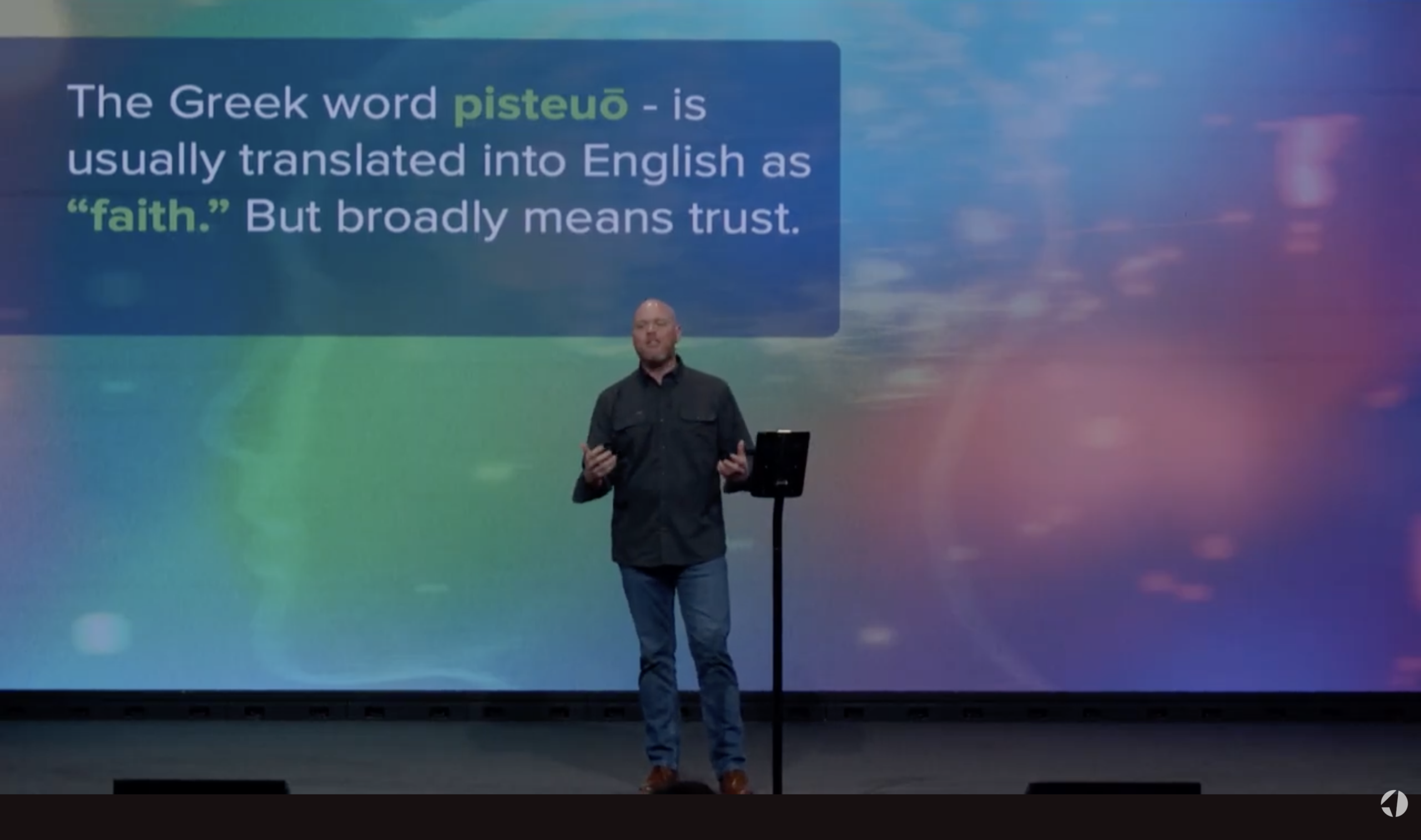
Genesis 3 shows us where that suspicion began. Before we talk about what went wrong, we have to understand what faith really is. In the New Testament, faith is not just believing facts. The word for faith carries the meaning of trust. It means to entrust yourself to someone.
Faith says, I believe. Trust says, I will risk obedience because I believe.
You can believe a chair can hold you, but trust is actually sitting down in it. That is what God invites us into.
The First Sin Was Not Only Rule Breaking, It Was Trust Breaking
In Genesis 3, the serpent’s strategy is simple and familiar. He introduces doubt with a question: “Did God really say?” He twists the truth, plants suspicion, and then offers a lie.
The tragedy is not only that Adam and Eve ate fruit. The deeper tragedy is that they stopped trusting God’s goodness and started trusting the enemy’s narrative. And what did they receive? Not wisdom, but shame.
Shame is that inner belief that you are not worthy, not enough, not who God says you are. It makes us hide. It makes us cover up. It makes us reach for our own “fig leaves,” ways of protecting ourselves that only scrape the soul and never heal it.
When trust breaks, it breaks trust with God, with each other, and even within ourselves.
Sin Is Not Passive, and Neither Are We
This message did not treat sin like a small mistake. Scripture describes it as something crouching at the door, eager to control. It wants dominion.
But God’s word also gives a powerful call: you must subdue it and be its master.
That language connects directly back to Genesis 1, where humanity is called to subdue and steward creation. In other words, we were never meant to just take the hits. We were created to push back against what destroys, and we do not do it in our own strength.
Our enemy is not God’s equal. God stands alone as the only supreme power. And the victory we need has already been won through Jesus’ death and resurrection. The wages of sin is death, but the gift of God is eternal life in Christ Jesus our Lord.
When you place your trust in Jesus, you receive forgiveness and you receive His Spirit alive in you. That means sin is not ultimate, and it does not have to rule you.
Trust Again, and Take New Ground
The invitation at the end of the message was clear: trust again. Take a risk of trust. Not because you are strong enough, but because Jesus is. Confess, receive cleansing, and push back against the lies that say you are too far gone, too damaged, too defined by your past.
In Christ, shame does not get the final word. The enemy does not get the final word. Trust can be restored.
And this week, you can say yes to Jesus and no to sin. Not alone, but together, with God’s power at work in you.
Discussion Questions:
1. Where do you notice “suspicion” showing up most in your life right now?
2. What is the difference between believing something about God and actually entrusting yourself to Him?
3. In Genesis 3, what lie do you think the enemy still uses most often today?
4. When you feel shame, what “fig leaves” do you tend to reach for to cover it?
5. What does it practically look like to “push back” against sin this week in your thought life, habits, or relationships?
6. What is one specific area where you need to trust again, even if it feels like a risk?